
Published: Oct 27th 2026
Author: [Ningbo Flag-up Hydraulic Co.,ltd] Engineering Team
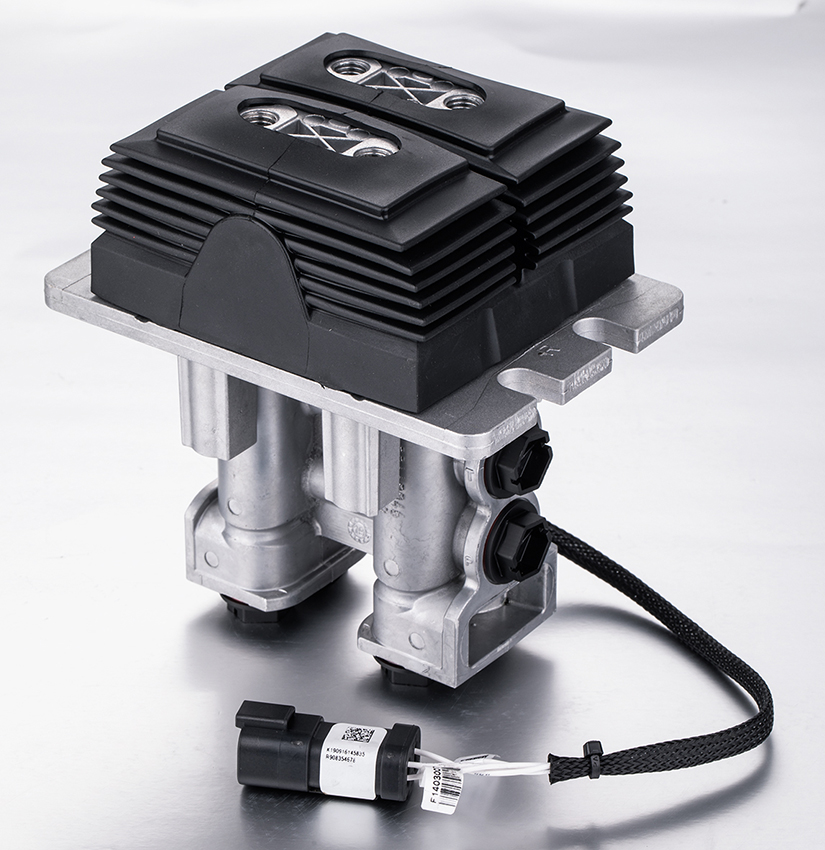
Electronic foot pedal pedal combine hydraulic pilot control with electronic feedback to translate operator input into precise pressure or flow. In travel control, a stuck output is a safety-relevant failure, not just a warranty event.
A returned unit showed pressure at neutral, a controller alarm, and failure to zero. Bench testing found the output stage continuously energized; tear down confirmed a shorted MOSFET. The short explained the symptoms—but not the cause.
Why a shorted MOSFET looks like a valve problem
When the MOSFET fails drain-to-source short, the solenoid is connected to supply regardless of the gate command. The valve stays open, pressure does not follow the pedal, the controller sees a feedback mismatch, and software cannot zero a hardware short.
Root causes: look upstream
- Inductive back-EMF — solenoids, proportional valves, relays, and buzzers generate a voltage spike at turn-off. A missing, open, or slow freewheeling diode/TVS can exceed the MOSFET’s rating and cause avalanche breakdown.
- Overcurrent or output short — shorted coil, chafed harness, water-contaminated connector, or load above rating. Fuse/current limit must be sized for inrush and hold current.
- Overvoltage and transients — load dump, jump-start, alternator transients, reverse polarity. Verify the transient profile and MOSFET avalanche rating.
- Thermal stress — continuous energization, poor thermal pad/copper area/heat-sink contact, or a sealed housing with limited convection. Thermal failure often ends as a D-S short.
- Gate drive and ESD — ringing, missing pull-down, gate-source overvoltage, damaged driver, or static discharge. If G-S is also shorted, suspect gate overstress rather than load current.
- Moisture and contamination — damaged connector seals, cable entries, or conformal coating can create conductive paths and corrosion.
- Feedback/control-loop faults — a sensor supply, ground, or signal fault can command 100% output, overheating the MOSFET. The board may be the last component to fail.
Design lessons
- Clamp every inductive output with a freewheeling diode or TVS; verify clamp voltage against MOSFET rating.
- Derate the MOSFET: at least 2× Vds and 2–3× current; use automotive/industrial-grade parts.
- Protect the gate with a resistor, pull-down, and gate-source TVS; keep the gate loop short.
- Validate thermal performance at maximum ambient, duty cycle, and solenoid current.
- Seal the electronics with IP-rated connectors, gaskets, cable glands, and conformal coating.
- Add current, voltage, and temperature diagnostics; command a safe state on fault.
- Run end-of-line, burn-in, thermal cycling, vibration, EMC, and load-dump tests.
Conclusion
A shorted MOSFET is usually a symptom of an upstream stress, not the root cause. When a pedal valve returns with pressure at neutral, an alarm, and a zeroing failure, start with the load, the transient environment, the thermal path, and the feedback loop. Replacing the board without correcting the cause invites repeat failures.
At [Ningbo Flag-up Hydraulic Co.,ltd], our engineering team supports hydraulic control valve design, failure analysis, and OEM/ODM projects for construction, agricultural, and material-handling applications.
Post time: Oct-27-2026