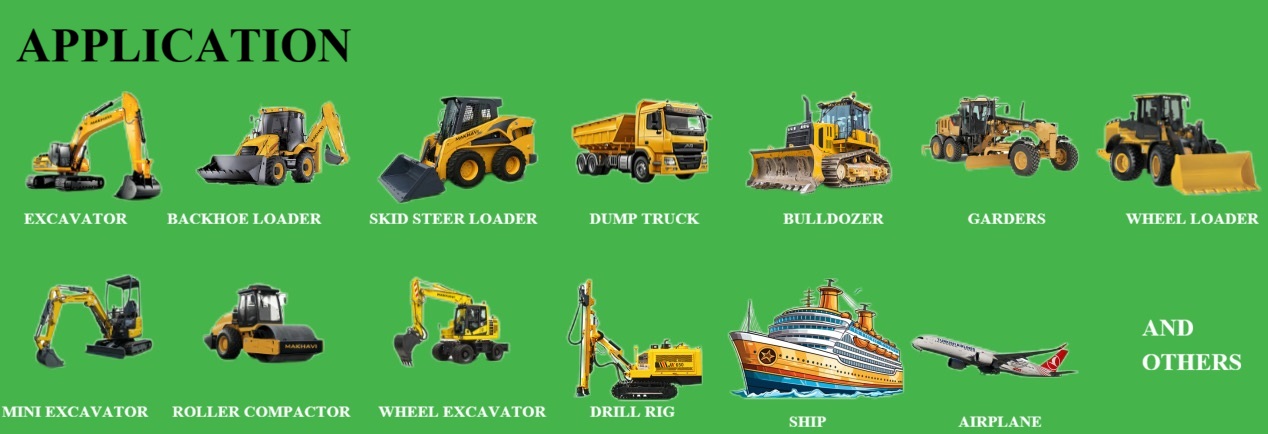
Electronic joystick
-

High-altitude Work Machine Electric Joystick with Proportional Push Rocker Switch
-

Axis Electric Joystick with Proportional Push Rocker Switch
-

Industrial joystick controller with Multi-Axis Can BUS J1939 output
-
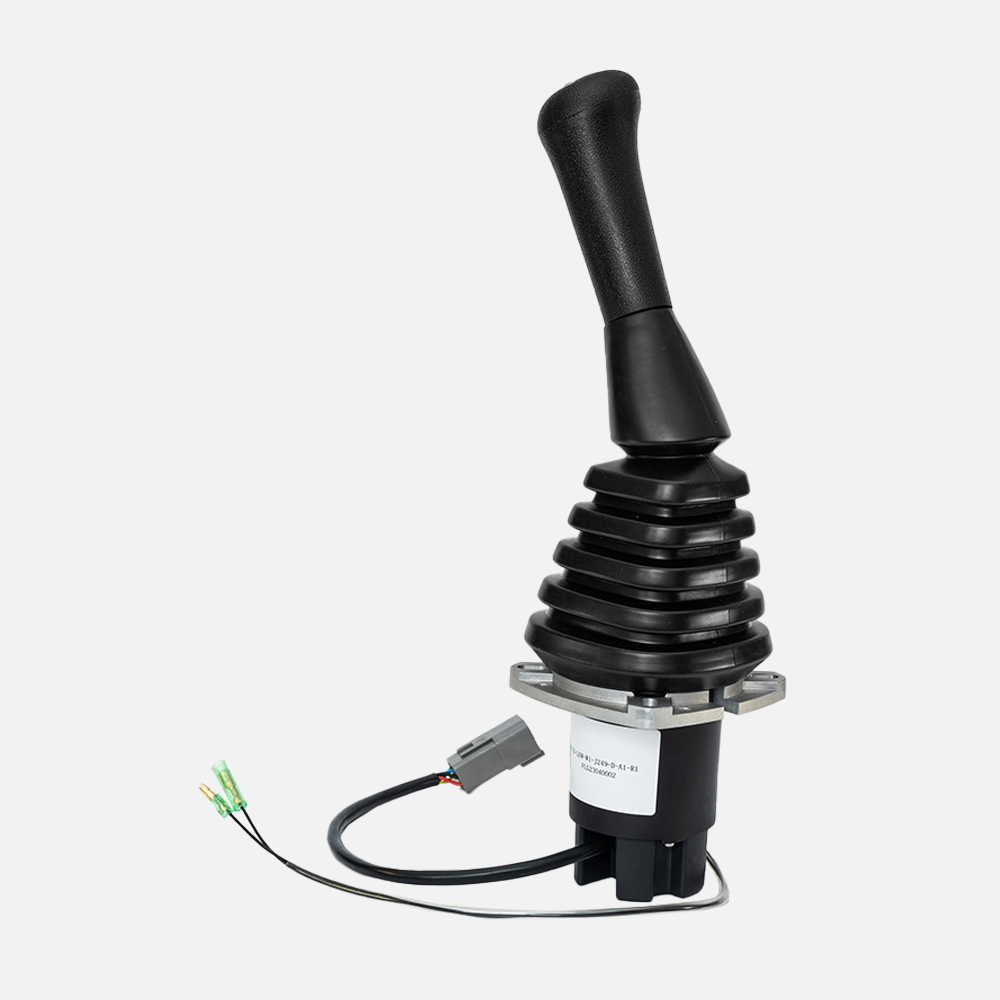
Excavator electric pilot control valve handle series
-
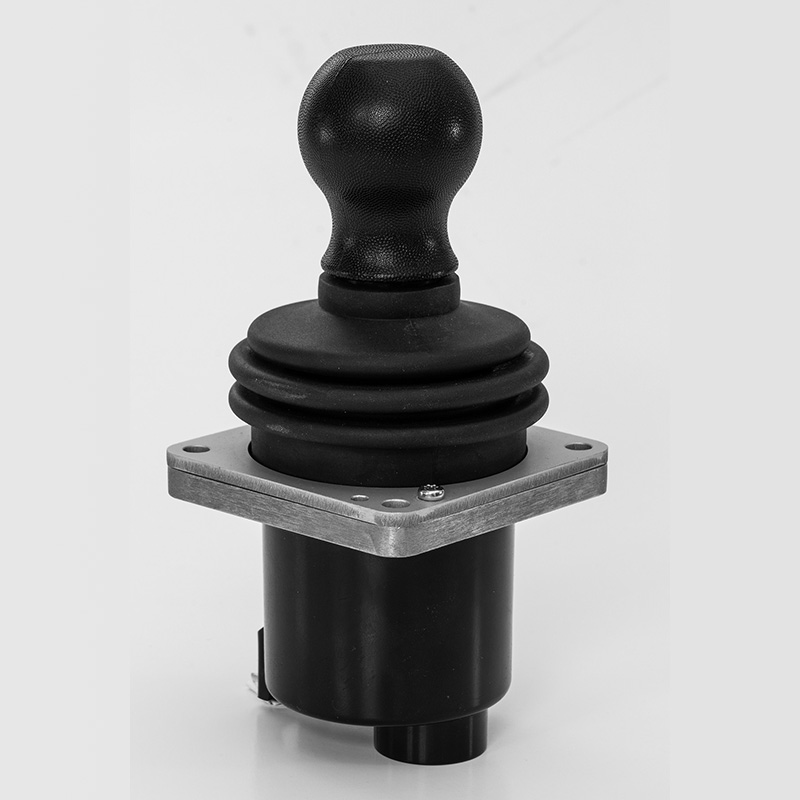
High altitude operation machine pilot valve
Flag-up electronic joysticks (often called Electric over Hydraulic or Digital joysticks) have largely replaced mechanical levers in modern machinery. They act as the "brain" that sends low-voltage electrical signals to a controller, which then operates hydraulic valves or electric motors.
1. Introduction: How They Work
Unlike a hydraulic joystick that physically pushes oil through small pilot lines, an electronic joystick uses sensors to detect movement.
Core Technologies
• Hall Effect Sensors: The most common type. They use a magnet and a semiconductor to measure position. Because there is no physical contact between moving parts, they are extremely durable and can last for millions of cycles.
• Potentiometers: Use variable resistance (like a volume knob). These are simpler and cheaper but can wear out over time due to friction.
• CANbus Integration: Most modern industrial joysticks don't just send raw voltage; they "talk" to the machine via a data network (like CANbus or J1939). This allows a single thin wire to carry signals for dozens of buttons and axes.
2. Key Applications
A. Construction & Heavy Machinery
Electronic joysticks are the standard for Excavators, Cranes, and Skid Steers.
• Function: They allow for "Mode Switching." For example, an operator can flip a switch to change the joystick pattern from "ISO" to "SAE" without changing any hydraulic hoses.
• Automation: They enable features like "Return to Dig," where a single button press moves the bucket back to a preset position.
B. Medical Equipment
• Electric Wheelchairs: Use highly sensitive "fingertip" joysticks that require very little force, making them accessible for users with limited mobility.
• Surgical Robots: Surgeons use high-precision electronic joysticks to control robotic arms (like the Da Vinci system) with sub-millimeter accuracy.
C. Marine & Offshore
• Vessel Docking: Modern yachts use joysticks to coordinate main engines and bow thrusters simultaneously, allowing the boat to move sideways or rotate in place.
• ROVs (Remotely Operated Vehicles): Pilots use multi-axis joysticks to navigate underwater drones in deep-sea exploration.
D. Material Handling
Forklifts & Reach Trucks: Electronic joysticks often replace 3 or 4 separate levers, allowing the operator to lift, tilt, and side-shift the forks using just their thumb and two fingers.
3. Comparison: Electronic vs. Hydraulic Joysticks
| Feature | Electronic Joystick | Hydraulic Pilot Joystick |
| Installation | Easy (thin electrical wires). | Difficult (stiff hydraulic hoses). |
| Cab Comfort | No heat or noise from oil lines. | Can get hot and noisy. |
| Customization | Programmable sensitivity & curves. | Fixed mechanical response. |
| Reliability | High (especially Hall Effect). | High (but prone to seal leaks). |
| Remote Operation | Easily controlled via radio/Wi-Fi. | Nearly impossible. |
4. Safety Features
• Deadman Switch: A trigger or button that must be held for the joystick to function, preventing accidental movement if the operator bumps the handle.
• Redundant Sensors: Most industrial joysticks use two sensors per axis. If the signals don't match, the system enters "Limp Mode" or shuts down for safety.
• Center-Lock: A mechanical collar that prevents the joystick from moving until it is intentionally lifted.